Community insights and unheard perspectives
We provided guidance on inclusive community engagement in the National Autism Strategy, identifying population groups who need a tailored approach to participate in consultation.
What we did
To support the development of the National Autism Strategy, we co-designed a series of recommendations to strengthen inclusive community engagement. The project identified population groups who may require tailored approaches to participate meaningfully in consultation and decision-making processes.
The recommendations were informed by a literature and environmental scan, analysis of the Community Views national survey (n=645), and workshops and interviews with autistic people and representatives from autism, disability and peak organisations (n=42).
Working alongside autistic advisors and community members, we used a five-phase co-design process to develop practical engagement strategies for the National Autism Strategy community engagement and consultation process.
What we found
Inclusive community engagement requires flexible approaches that recognise people’s different needs, preferences and experiences, particularly for those from under-represented groups and communities facing multiple forms of disadvantage.
There is no one-size-fits-all approach to co-design and consultation. The findings highlight the importance of accessible, inclusive engagement that enables diverse voices to be heard and influence policy.
Why this matters
Public policy is most effective when it reflects community needs, draws on evidence and lived experience, and includes the voices of those most impacted. This work provides practical guidance on accessible communication, flexible engagement, equity, transparency and discussing sensitive topics with care, helping organisations engage more effectively with autistic people and communities that are often under-represented.
The findings can help governments and organisations create more inclusive and meaningful engagement processes that ensure diverse perspectives are heard, valued and reflected in decision-making and the resulting policies and solutions.
Project team
Cheryl Mangan, Hayley Clapham, Brendan James, Liv Gatfield and Stephanie Malone.
Project partners
- Griffith University
Related resources
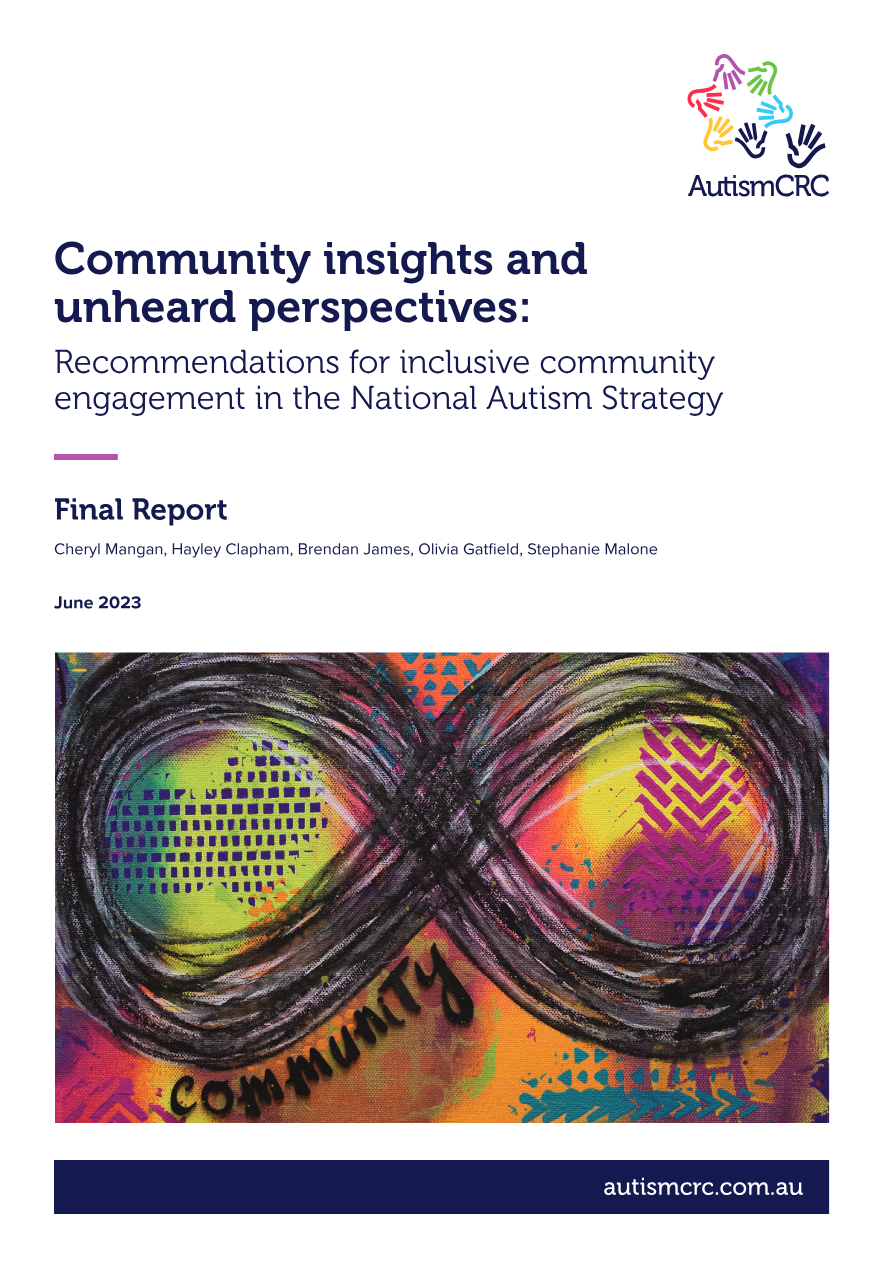
Community insights and unheard perspectives: Inclusive community engagement in the National Autism Strategy
Guidance to help governments and organisations create more inclusive and meaningful engagement processes that ensure diverse perspectives are heard, valued and reflected in decision-making and resultant policies and solutions.
Community insights and unheard perspectives (Easy Read)
An Easy Read summary of how governments and organisations can involve autistic people whose voices are often not heard.